The short answer
Matcha's main side effects come from its concentrated caffeine and catechin content: possible sleep disruption, stomach upset on an empty stomach, and reduced iron absorption if taken with iron-rich meals. One to two servings a day is generally well tolerated.
Key takeaways
- Matcha carries more caffeine per gram than steeped green tea because you drink the leaf.
- Stomach upset and iron interference are the two most common practical issues.
- Concentrated extract capsules, not brewed matcha, are where safety concerns concentrate.
- One to two servings a day, taken with food, suits most people.
Why matcha behaves differently from a teabag
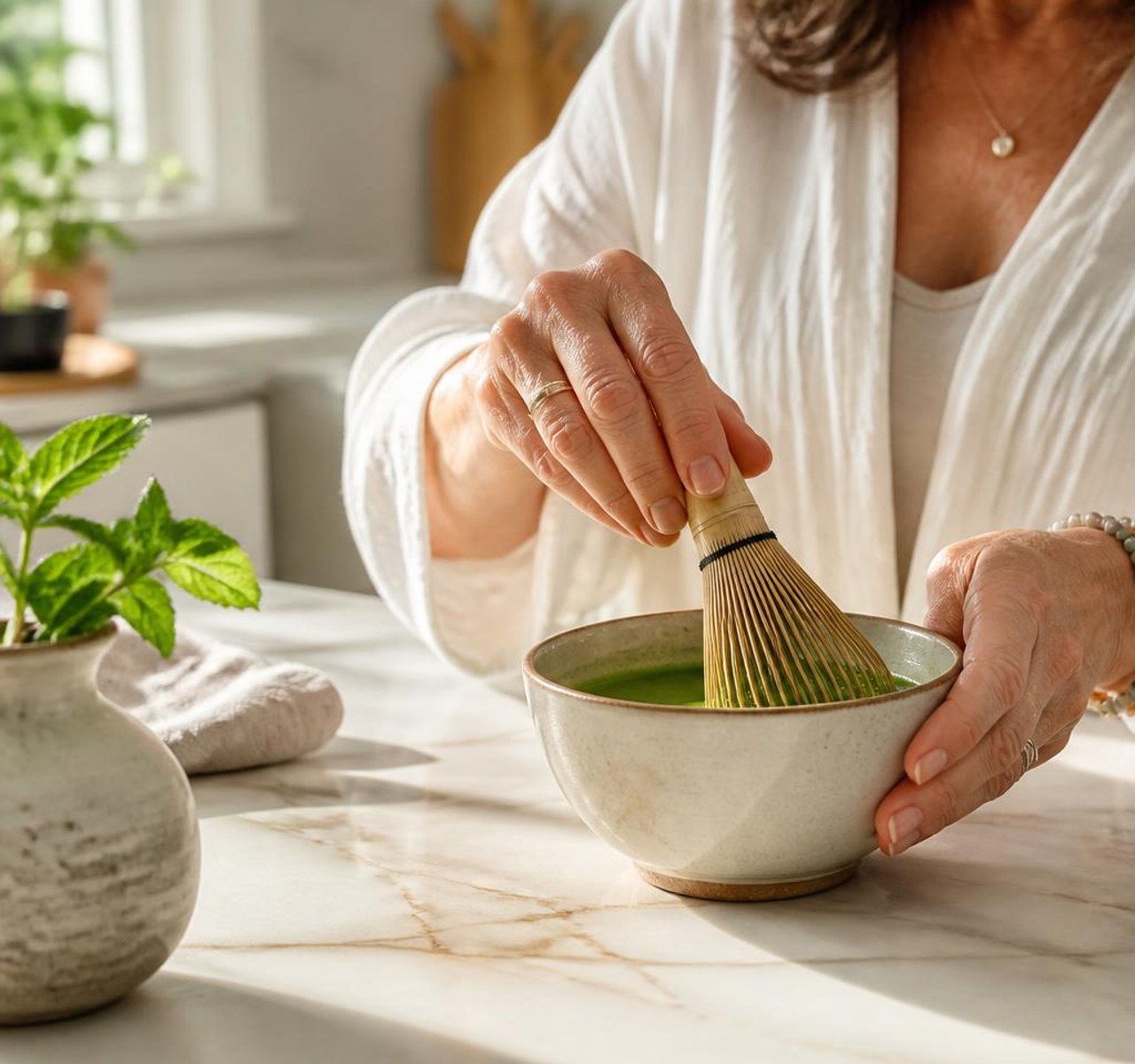
Steeped green tea is water that has passed through leaves for a few minutes before you discard them. Matcha is those leaves, stone-ground and whisked directly into the water, so nothing is left behind. That single difference is why matcha delivers noticeably more caffeine and catechins per serving than an ordinary cup of green tea, and why its effects — both wanted and unwanted — tend to be more pronounced.
None of this makes matcha dangerous. It simply means the usual advice for tea does not scale up perfectly, and a few adjustments are worth knowing before you build it into a daily ritual.
Caffeine: the main variable
A typical serving of matcha sits somewhere between a weak and a moderate cup of coffee in caffeine terms, though exact amounts vary by brand and grade. Most people find the effect feels gentler than coffee because matcha also contains L-theanine, an amino acid that tends to smooth out the jitteriness caffeine can bring. But caffeine is still caffeine: taken in the afternoon or evening it can cost you sleep, and in sensitive people it can raise heart rate or trigger anxiety at any time of day.
If you already track your caffeine from coffee, cola or other tea, count matcha in that total rather than treating it as separate. The body does not know which drink the caffeine came from.
Stomach upset and when it happens
Green tea catechins can irritate the stomach lining in some people, particularly on an empty stomach first thing in the morning. The usual fix is straightforward: drink matcha with or shortly after food rather than as the very first thing you consume. Most people who report queasiness from matcha find it resolves entirely once they move it after breakfast rather than before it.
Iron absorption is a real, manageable issue
Tea catechins bind to non-haem iron — the type found in plant foods and fortified cereals — and can reduce how much of it your body absorbs from a meal eaten at the same time. This matters most if you are iron deficient, vegetarian, vegan, or menstruating heavily. The practical workaround is timing: leave roughly an hour between matcha and your main iron-containing meals, and if you have a diagnosed deficiency, raise the habit with your doctor rather than guessing.
Concentrated extracts are a different product entirely
Most of the safety attention around green tea in the research literature has focused on high-dose concentrated extract supplements — capsules delivering many times the catechin content of a cup of tea — rather than on brewed or whisked tea itself. That is a meaningful distinction to keep in mind if you see alarming headlines about green tea extract: they are almost never describing the drink you make in your kitchen.
How much matcha per day is sensible
One to two servings is the range most people settle on, and one is enough for the majority. There is no bonus for drinking more — beyond a certain point you are simply moving yourself closer to the caffeine dose that disturbs sleep or unsettles your stomach, without any extra benefit to show for it.
Common issues and what tends to help
| Issue | Likely cause | What tends to help |
|---|---|---|
| Trouble sleeping | Caffeine taken too late in the day | Move matcha to the morning and stop by early afternoon |
| Stomach upset | Catechins on an empty stomach | Drink matcha with or after food rather than first thing |
| Lower iron absorption | Catechins binding to non-haem iron | Leave an hour or so between matcha and iron-rich meals |
| Jitteriness or racing heart | Caffeine sensitivity | Try half a serving, or stop and speak with a doctor |
Who should check with a doctor first
- Anyone pregnant or nursing, where caffeine intake is usually capped.
- Anyone taking blood thinners, blood-pressure medication or diabetes medication.
- Anyone with a liver condition, thyroid condition or a diagnosed iron deficiency.
- Anyone who has been specifically advised to avoid or limit caffeine.
- Anyone with a history of caffeine-triggered anxiety or heart palpitations.
Signs you should scale back
Trouble falling asleep, a racing heart, jitteriness, or stomach discomfort that does not settle after moving matcha to after a meal are all reasonable signals to reduce the amount, switch to half a serving, or stop and speak with a healthcare professional. These are not rare, dramatic reactions — they are the ordinary caffeine-sensitivity signals that apply to coffee and strong tea too.
People also ask
Does matcha have more caffeine than coffee?
Generally no. A typical serving of matcha usually contains less caffeine than a cup of brewed coffee, though it carries more than a standard cup of steeped green tea. Exact amounts vary by brand, grade and serving size.
Can matcha cause anxiety?
In people sensitive to caffeine, yes — any caffeinated drink can trigger jitteriness or anxious feelings. L-theanine in matcha tends to soften this compared with coffee, but it does not eliminate the effect for everyone.
Is it safe to drink matcha every day?
For most healthy adults, one to two servings a day is well tolerated long-term. People with specific medical conditions or on certain medications should confirm with a doctor first.
Does matcha stain teeth?
Like other teas, matcha contains tannins that can contribute to staining over years of regular use, though usually less than coffee. Rinsing with water afterwards is a simple precaution.
Can I drink matcha while pregnant?
Caffeine intake is generally capped during pregnancy, and matcha's caffeine content should count toward that limit. Speak with your midwife or doctor about how matcha fits your personal allowance.
The important caveat
Almost everything reported as a matcha side effect is a caffeine or catechin dose issue, not a unique risk of matcha itself. Treating it with the same respect you give strong coffee — mindful of timing, amount and your own sensitivity — resolves nearly all of it.
These statements have not been evaluated by the Food and Drug Administration. This page is not medical advice, and it is not a substitute for guidance from your own clinician, particularly if you are pregnant, nursing, or managing a diagnosed health condition.
How we write this
Every page here is written and fact-checked by the LeanTide team. We describe what ceremonial matcha and the other ingredients are studied for — we do not claim LeanTide treats, cures or prevents any condition, and we do not publish before-and-after numbers we cannot stand behind. Where a claim comes from published research, the reference is linked. Nothing on this page is medical advice; talk to your own clinician before changing anything about your medication, pregnancy or health plan.
